10% off on product page · save $1.44
A Beginner Home Core Routine for Busy Days
Your core is more than the abdominal muscles you can see. It includes muscles around your abdomen, back, and pelvis that help stabilize your body when you move. Whether you are carrying groceries, reaching for something on a shelf, or exercising, those muscles work together to support control and balance. The Mayo Clinic’s overview of core exercises explains why strengthening this area can benefit everyday activities.
Keep expectations realistic: core exercises build strength, but they do not selectively remove belly fat. Treat this routine as one part of your overall activity plan, not as a shortcut to a particular appearance.

Warm up with a few minutes of easy movement, such as marching in place. Move through the exercises slowly and breathe steadily. Rest when you need to; shorten a hold or reduce repetitions if your form slips.
These amounts are starting suggestions, not targets you must meet on day one.
Featured in this guide
stronger-core-starts-here-with-the-home-abs-workout-guide-abs-workout-routine-at-home-digital-fitness-guide-for-busy-schedules
Try core sessions on nonconsecutive days to leave time for recovery. Pairing a session with an existing habit—changing into comfortable clothes after work, for example—can make it easier to begin. On especially full days, choose a few exercises and return to the complete session next time.
Movement outside a dedicated workout matters, too. Building Movement Into Your Workday is a complementary digital option to review for ideas.
Check the listed dimensions for find a place for it in your week against the available vehicle space before use.
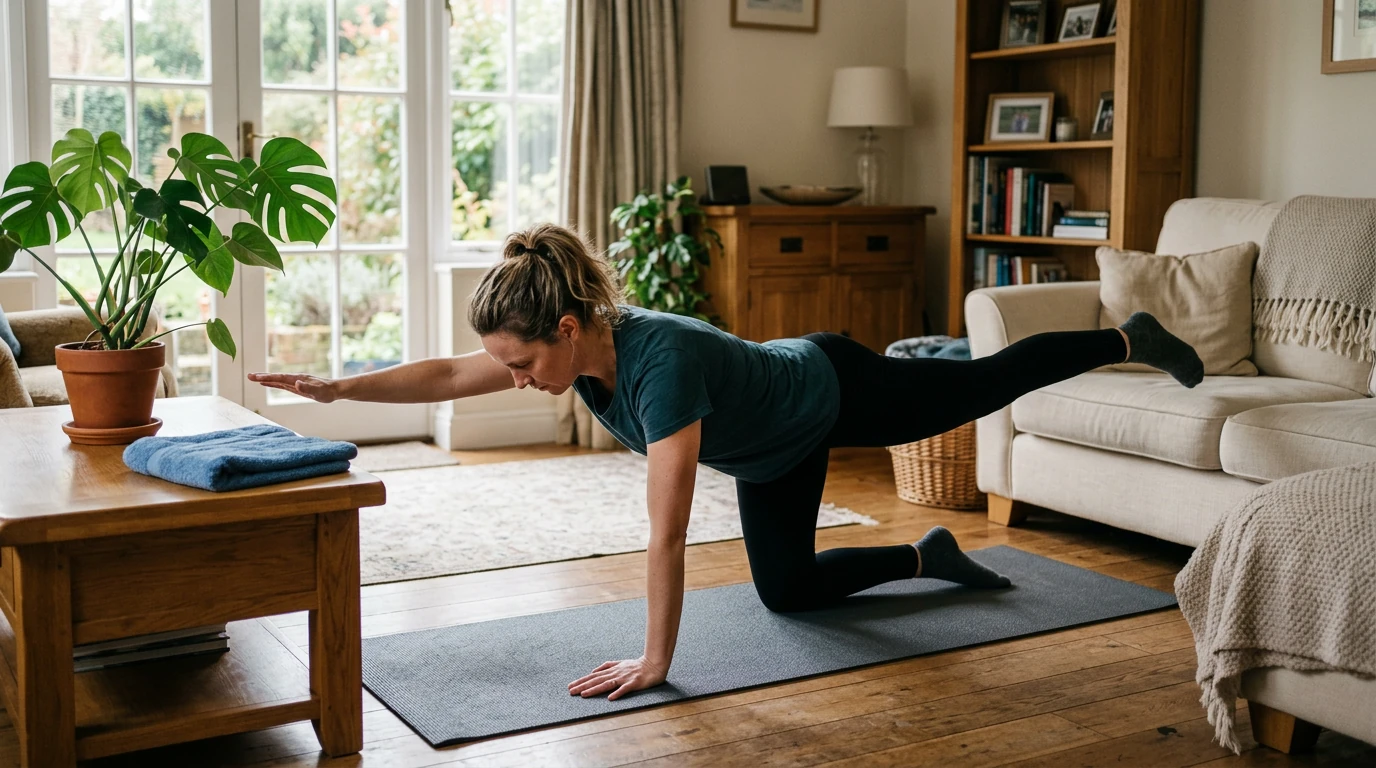
Notice whether bird dogs feel steadier, dead bugs feel more controlled, or you can finish a round while breathing comfortably. When the session feels manageable, change one thing at a time: add a repetition, extend a hold slightly, or try another round.
Scale back if you lose alignment or hold your breath. Stop any exercise that causes sharp pain. If you have an injury, persistent pain, or a health condition that may affect exercise, seek individualized guidance from a qualified medical professional.
The Home Abs Workout Guide is a digital fitness guide positioned for at-home routines and busy schedules. Review its product details to decide whether it suits your goals. You can also use the beginner session above on its own.
Before choosing, compare the product details with your daily routine, available space, care needs, and preferred setup. The strongest option is usually the one that fits the intended use clearly and remains simple to clean, store, and check before repeat use.
It is also worth checking measurements, material notes, included parts, and compatibility details so the item matches the way it will be used after delivery.
Before choosing, compare the product details with your daily routine, available space, care needs, and preferred setup. The strongest option is usually the one that fits the intended use clearly and remains simple to clean, store, and check before repeat use.
It is also worth checking measurements, material notes, included parts, and compatibility details so the item matches the way it will be used after delivery.
There is no fixed timeline; progress depends on your starting fitness, consistency, and recovery. Compare how the same exercises feel over several weeks rather than expecting a change by a particular date.
Difficulty maintaining control during simple core movements or tiring quickly in an aligned plank may suggest you need to build strength. Those observations are not a diagnosis, especially if pain or another health concern is involved.




Leave a comment